
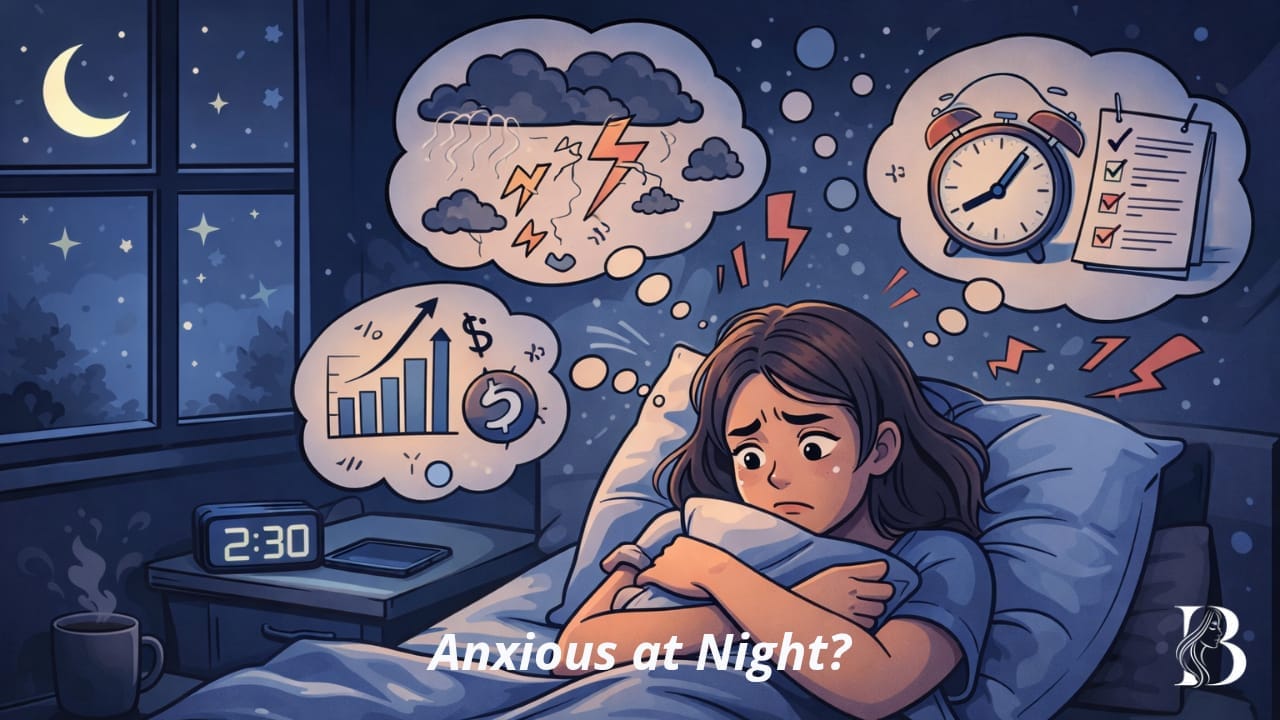
There was a time when my mind never felt quiet. Even when nothing was wrong, I still felt tense, worried, or restless inside. The more I tried to relax, the more my thoughts kept running. I noticed this especially at night, when everything became silent, but my mind did not. During that time, I started looking for natural ways to calm anxiety. You can read more about why this happens in my previous article about why anxiety gets worse at night below.
That is when I started learning how meditation helps anxiety and why so many people use meditation for mental peace. At first, I thought meditation was something difficult or only for very spiritual people. But after practicing for a few days, I realized it is actually very simple. Meditation is just a way to slow down the mind and give your brain some rest. Even a few minutes of quiet breathing can make a big difference.
Over time, I noticed that meditation did not remove my problems completely, but it changed how my mind reacted to them. I felt less overwhelmed, slept better, and could handle stress more calmly.
What Meditation Really Does to Your Mind
In my experience, anxiety often comes from too many thoughts at the same time. The brain keeps jumping from one worry to another. When this happens, the body stays tense, breathing becomes shallow, and it becomes hard to relax.
Meditation works by giving your mind one simple thing to focus on. It can be your breathing, a word, or a calm sound. When the mind stays on one point, the constant flow of thoughts slowly becomes quieter. This makes the nervous system relax.
According to the Mayo Clinic, meditation can help calm the mind, reduce stress, and improve emotional well-being. It may also help lower heart rate, relax muscles, and improve sleep quality. Because of this, many people feel more peaceful after meditation, even if they practice for only a few minutes. You can read more on https://www.mayoclinic.org/test…
I noticed that meditation does not remove my problems completely, but it changes how my mind reacts to them. When the mind feels calmer, anxiety feels easier to control.
Why Meditation Helps Reduce Anxiety
One reason meditation helps to reduce anxiety is that it teaches the brain to stay in the present moment. When we feel anxious, the mind usually thinks about the future or the past. We worry about things that did not happen yet, or we keep remembering something stressful.
During meditation, you bring your attention back to the present again and again. This simple habit slowly trains the brain to stop overthinking. Over time, the mind becomes less reactive and more stable.
Another thing I noticed is that meditation helps the body relax. When anxiety is high, the body stays in a fight-or-flight state. Meditation tells the body that it is safe. Breathing becomes slower, muscles loosen, and the heart beats more calmly.
Different Types of Meditation You Can Try.
When I first started, I thought meditation had only one method. Later, I learned that there are many simple ways to do it. You can choose what feels comfortable.
Some common types include–
- Breathing meditation.
- Mindfulness meditation.
- Guided meditation.
- Mantra (chant) meditation.
- Walking meditation.
- Prayer or quiet reflection.
- Practice slow breathing or pranayama:- Slow breathing exercises, sometimes called pranayama, can help calm the nervous system. I like to take slow, deep breaths and focus on the feeling of air moving in and out. This simple habit can reduce tension and make the mind feel steady.
All of them have the same goal — to calm the mind and reduce mental tension. You do not need special equipment, a special place, or a long time. Even a few minutes can help.
5 Simple Ways to Practice Meditation for Anxiety
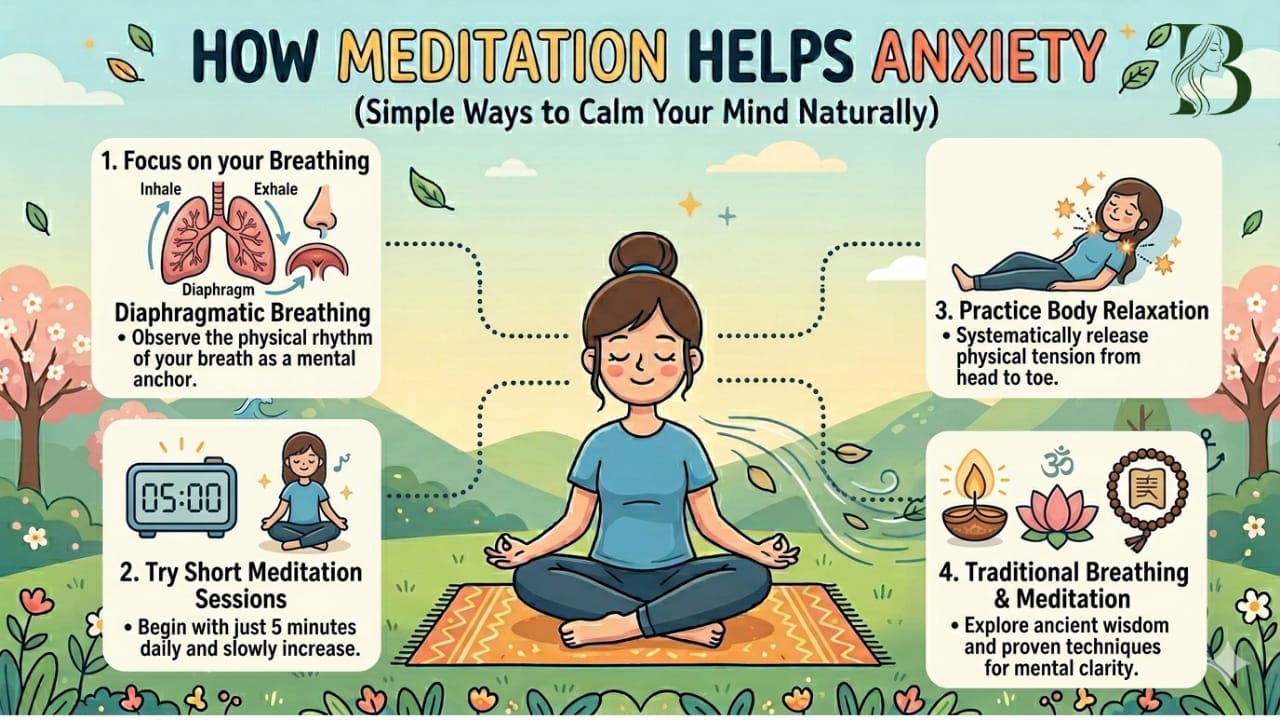
1. Focus on your breathing
This is the easiest way to start. Sit quietly and pay attention to your breath. Notice how the air goes in and out.
When your mind starts thinking about something else, gently bring your attention back to breathing. I use this method when my thoughts feel too loud, and it helps me calm down quickly.
2. Try short meditation sessions
Many people think meditation must be long, but that is not true. Even five minutes can help. In my experience, short sessions are easier to continue every day. When I tried to meditate for too long, I felt frustrated. But when I kept it simple, it became a natural habit.
3. Use guided meditation
Sometimes it is hard to meditate alone, especially when anxiety is high. Guided meditation can help. You can listen to a calm voice that tells you how to breathe or relax your body. This makes it easier to stay focused. I often use guided meditation before sleep.
4. Practice body relaxation
Another helpful method is to relax each part of the body slowly. Start from your feet and move upward. Notice where you feel tension, then let it go.
When I do this, I realize how much stress I hold in my shoulders and neck. Relaxing the body makes the mind calmer too.
5. Traditional Breathing and Meditation Practices(Pranayama) That Help Calm Anxiety
While learning about meditation, I also became interested in some traditional breathing and relaxation practices from India. At first, I thought these techniques would be complicated, but many of them are actually simple and very helpful for calming the mind.
One practice I tried was pranayama, which means slow and controlled breathing. This type of breathing helps the body relax and makes the mind feel more stable. When I focus on slow breathing, I notice that my thoughts become less intense and my body feels lighter.
Another technique I learned about is kapalbhati breathing, which involves short and active breaths followed by calm breathing. I do not practice it every day, but when done gently, it can help clear mental tension and improve focus. Beginners should start slowly and avoid forcing the breath.
I also found that simple dhyana, or quiet sitting meditation, works very well for anxiety. This is just sitting comfortably, closing your eyes, and watching your breath without trying to control it. When I do this for a few minutes, my mind feels less crowded and more peaceful.
These traditional methods are different from modern meditation apps, but the goal is the same – to calm the nervous system and bring the mind back to the present moment. You do not need to follow any religion to try them. Even simple breathing and quiet sitting can help reduce anxiety naturally.
6. Be patient with yourself
This was the hardest lesson for me. In the beginning, my mind kept wandering, and I thought I was doing meditation wrong.
But meditation is not about stopping thoughts completely. It is about noticing them and gently coming back to the present. The more you practice, the easier it becomes.
My Personal Experience With Meditation and Anxiety
When my anxiety was strong, I wanted a quick solution. I thought meditation would work instantly. But I learned that meditation works slowly, like training a muscle.
At first, I could not sit quietly for even two minutes. My mind kept thinking about work, family, and small problems. But I kept trying every day.
After a few weeks, I noticed something different. I was not as reactive as before. Stressful situations still happened, but my mind did not panic so easily. I also started sleeping better, and my body felt less tense.
Meditation did not make life perfect, but it made my mind stronger. And that made a big difference.
When Meditation May Not Be Enough
Meditation is very helpful, but it is not a replacement for medical treatment. If anxiety feels too strong or affects daily life, it is important to talk to a professional.
Meditation works best as a natural support. It helps the mind stay balanced, but sometimes extra help is needed. There is nothing wrong with that.
Conclusion
In my experience, meditation is one of the simplest ways to calm anxiety naturally. It does not cost anything, and you can do it anywhere. Even a few minutes of quiet breathing can help your mind feel lighter.
Meditation teaches the brain to slow down, stay in the present, and react less to stress. Health experts also explain that meditation can support emotional balance and help manage stress when practiced regularly.
If you are new to meditation, start small. Be patient with yourself. The goal is not to have a perfect mind, but a calmer one.
With regular practice, meditation can become a peaceful part of your daily life.
FAQs:
Is meditation really helpful for anxiety?
Yes, many people find meditation helpful for anxiety. In my experience, meditation does not remove problems, but it makes the mind calmer. When the mind feels calm, it becomes easier to handle stress and negative thoughts. Even a few minutes of meditation every day can make a difference over time.
How long should I meditate to reduce anxiety?
You do not need to meditate for a long time. Beginners can start with 5 to 10 minutes a day. I noticed that short sessions done regularly work better than long sessions done once in a while. The key is to practice daily, even if it is only for a few minutes.
What type of meditation is best for anxiety?
Simple breathing meditation is often the best for beginners. You can also try guided meditation, mindfulness, or slow breathing exercises like pranayama. The best method is the one that makes you feel relaxed and comfortable.
Can meditation help with sleep problems?
Yes, meditation can help calm the mind before sleep. When anxiety keeps the brain active at night, meditation helps slow down thoughts and relax the body. Many people notice better sleep after practicing meditation regularly.
Is meditation safe for everyone?
Meditation is generally safe for most people. However, if you have severe anxiety, depression, or other mental health problems, it is better to talk to a doctor or therapist. Meditation can help, but it should not replace professional treatment when it is needed.
How long does it take for meditation to work?
Meditation does not work instantly for everyone. In my experience, it takes a few days or weeks of regular practice to notice changes. The more you practice, the easier it becomes to calm your mind.


💬 Have a question or experience about this wellness tip? Share your thoughts below and join the discussion.