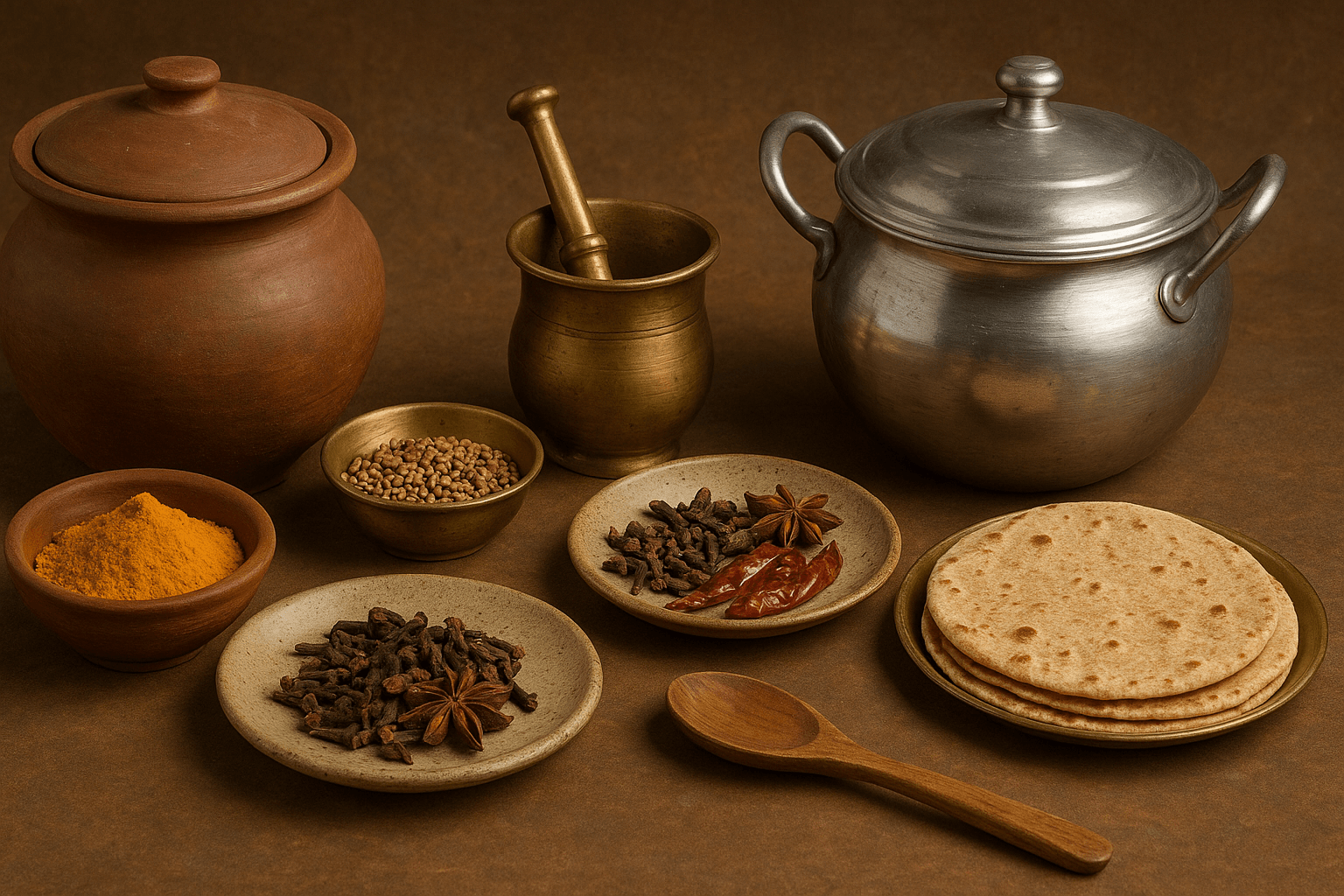
he Indian kitchen is a vibrant and lively space filled with colors, aromas, and traditions. It is the heart of the home where families come together to cook, share meals, and celebrate culture. An Indian kitchen is known for its wide variety of spices such as turmeric, cumin, coriander, and cardamom, which give Indian food its unique flavor. These spices are often stored in a traditional masala dabba, a round spice box found in almost every household.
Indian kitchens also reflect regional diversity. In the south, you may find coconut, curry leaves, and rice flour; in the north, wheat, ghee, and garam masala are more common. Utensils like pressure cookers, tawas, tandoors, and grinding stones have long been part of Indian cooking. Today, modern appliances like mixers, microwaves, and air fryers sit beside traditional tools, blending old techniques with new convenience.
Meals in an Indian kitchen are usually prepared with fresh ingredients, and many families still cook twice a day. The aroma of tadka—hot oil tempered with mustard seeds, garlic, or chilies—is a familiar and comforting smell in most homes.
Overall, the Indian kitchen is more than just a cooking area; it is a place where memories, flavors, and traditions are passed down through generations.